

As public agencies increasingly turn to alternative delivery methods for water infrastructure projects, the application of California’s design immunity protections is becoming more complex. While design immunity traditionally shields public entities from liability when approved plans are reasonable and design changes are thoroughly documented, delegating both design and construction responsibilities to private developers can blur accountability and create new risks.
Maintaining design immunity protections may require agencies to stay actively involved in the ...

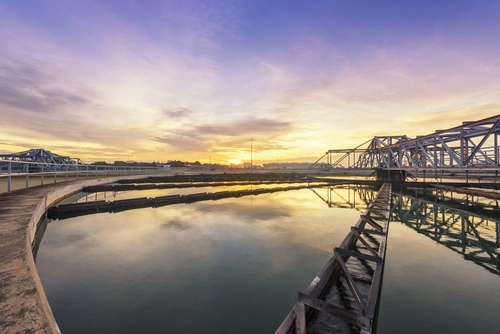
The U.S. Environmental Protection Agency (EPA) has updated the federal requirements for the Water Infrastructure Finance and Innovation Act (WIFIA) Program through more than a dozen changes to the WIFIA Borrower Guide to Federal Requirements (Borrower Guide) and the WIFIA Specification Package and Bid Contract Language (Bid Contract Language). While some changes are minor, others will likely have major impacts on project owners and developers ...

The National Environmental Policy Act (NEPA), the California Environmental Quality Act (CEQA) and other environmental laws can create significant legal risks for the delivery of complex infrastructure projects using alternative procurement strategies. On October 10, 2024, I had the pleasure of collaborating with my Nossaman colleague Rob Thornton, along with guest speaker Tim Suydam from the East County Advanced Water Joint Powers Authority, to discuss …

On September 23, 2024, the United States District Court for the Eastern District of Kentucky issued an Opinion and Order in Mid-America Milling Co., LLC, et al., v. U.S. Department of Transportation, et. al., No. 3:23-CV-00072-GFVT, 2024 WL 4267183 (E.D. Ky. Sept. 23, 2024), granting a preliminary injunction on the basis that the race- and gender-based rebuttable presumptions used in the U.S. Department of Transportation (USDOT) Disadvantaged Business Enterprise (DBE) program violates the United States Constitution’s guarantee of equal protection under the Fourteenth Amendment. ...

Through recent updates to California’s Public Contract Code, public agencies are being equipped with new tools to deliver major infrastructure projects through use of the progressive design-build (PDB) model. As more public agencies gain access to the legislative tools available to use PDB, we expect to see an increasing number of water projects undertaken and completed successfully under the PDB or other early contractor delivery methods. …

The U.S. Department of Transportation (USDOT) recently announced a long-awaited Notice of Funding Opportunity (NOFO) for public agencies to enhance technical capacity to deliver projects using a public-private partnership (P3) model. Authorized by the Infrastructure Investment and Jobs Act (P.L. 117-58; also known as the IIJA), $57.72 million is available through the Innovative Finance and Asset Concessions Grant Program (Program) for public agencies to hire technical, financial and legal experts (either on staff or as consultants) to support the evaluation and delivery ...

When an infrastructure project takes the first steps from vague idea towards becoming a reality, public owners must make countless decisions on how to advance the project. One decision of particular importance is the selection of the project delivery method, which has significant impacts on the project’s timeline and budget. While many owners are familiar with a variety of project delivery methods, including alternative delivery methods such as design-build, construction manager-at-risk and public-private partnerships, knowing when to choose one option over another can ...

On December 1, 2022, Nossaman partner Simon Santiago moderated a panel at the 2022 P3 Government Conference held in Arlington, Virginia, titled, “Best Practices for Successful P3 Procurements: Identify the Appropriate P3 Process for Your P3 Approach.” The panelists, comprised of Jack Callahan (Partner and Construction Industry Practice Leader, CohnReznick); Michael Kerrigan (Principal, Delgany Advisory); and Brandey McDonald (Project Director, Infrastructure Asset Management, Fengate), offered a variety of perspectives from the lens of legal, technical and ...
Public agencies with toll-setting authority should take note of a recent federal court decision relating to the uses of user fees and toll revenue, as well as the stated goals of the plaintiff in that case.
The U.S. District Court for the Southern District of New York recently clarified the constitutional uses of toll revenue in American Trucking Associations v. New York State Thruway Authority, 13 Civ. 8123 (CM) (S.D.N.Y. Aug. 10, 2016). In this case, commercial trucking companies and the American Trucking Associations (ATA) claimed that the New York State Thruway Authority ...
Public agencies and private entities are increasing collaboration to develop, operate and maintain a variety of transportation and building projects. The involvement of a public agency in these public-private partnerships or P3s may necessitate compliance with statutes or regulations not otherwise applicable to privately developed projects, including a requirement to pay prevailing wages to construction workers. In a recent decision, the U.S. Court of Appeals held that a private project developed on land leased from the District of Columbia (D.C.) is not subject to the Davis ...
Nossaman’s 30-plus infrastructure attorneys offer clients, colleagues, strategic partners and industry media a wealth of practical experience, insider insight and thoughtful analysis here on Infra Insight. We blog about what we know best, from industry-leading procurements to local and national policy developments that affect the market and our clients.
Stay Connected
 RSS Feed
Categories
- Airports
- Alternative Project Delivery
- Bridges
- California Environmental Quality Act
- California Water Views
- Cybersecurity
- Design-Build
- Energy
- Financing
- High-Speed Rail
- Infrastructure & Construction
- Job Opening
- Legal Insights
- Legal Precedents
- Legislation
- News
- P3s
- Policy
- Ports
- Rail and Transit
- Social Infrastructure
- Tollroads/ Turnpikes/ Managed Lanes
- Transportation Infrastructure
- Tunnels
- Water
- Water & Environmental Law
- Water Management
