
Since the Supreme Court invalidated the International Economic Emergency Powers Act (“IEEPA”) tariffs, refunds are on everyone’s mind. Learning Resources, Inc. v. Trump, 607 U.S. ___, No. 24-1287 (2026). Recent estimates are that Customs and Border Protection (“CPB”) collected between $166 billion and $182 billion in IEEPA (“reciprocal”) tariffs. Public officials at all levels of government are demanding refunds be distributed to consumers who ultimately bore these costs ...

The Government Accountability Office’s (GAO) annual report on federal bid protests includes useful insights into federal procurement trends that can help state and local government agencies mitigate bid protest risks. Among other findings, the GAO’s 2025 fiscal year report identified unreasonable technical evaluation, unreasonable cost or price evaluation, and unreasonable rejection of proposal as the three most prevalent reasons for sustained protests. Examining the cases identified by the GAO as exemplars for each of those reasons can help public owners understand procurement practice pitfalls that could expose them to protest ...
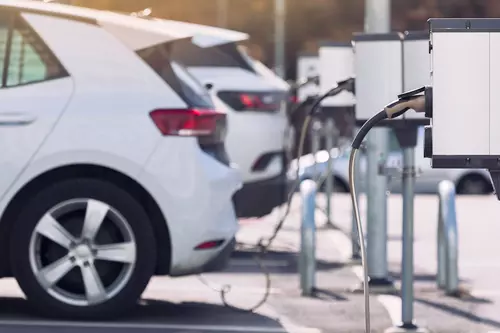
The United States District Court for the Western District of Washington on January 23, 2026, granted a motion for summary judgment to 20 states and the District of Columbia (the “Named Plaintiffs”) related to the United States Department of Transportation’s (U.S. DOT) and Federal Highway Administration’s (FHWA) (collectively, the “Defendants”) suspension of the National Electric Vehicle Infrastructure Formula Program (the “NEVI Program”) funding and revocation of FHWA-approved State Electric Vehicle Infrastructure Deployment Plans (the “State Deployment Plans”), required as a prerequisite for obligation of NEVI Program funds ...
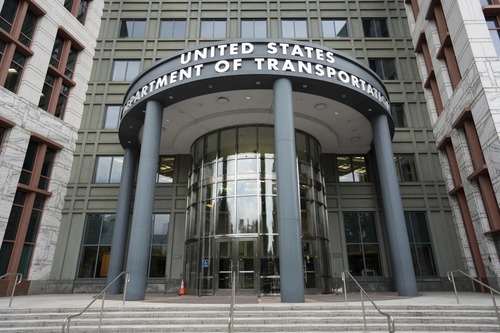
On December 1, 2025, the United States Department of Transportation (U.S. DOT) published an updated frequently asked questions (FAQs) on the October 3, 2025 Interim Final Rule (IFR) for the Disadvantaged Business Enterprise (DBE) program, which eliminates the race- and gender-based presumption of disadvantage for businesses applying for DBE certification …

The National Electric Vehicle Infrastructure (NEVI) Formula Program (the “NEVI Program”) was established by the Infrastructure Investment and Jobs Act (IIJA), Public Law 117-58 and was authorized under paragraph (2) under the Highway Infrastructure Program heading in title VIII of division J of the IIJA. The NEVI Program provides $5 billion of funding to States to deploy electric vehicle (EV) charging infrastructure and establish an interconnected network to facilitate data collection, access, and reliability. Although States are required to prioritize the allocated funding to infrastructure acquired or installed along designated EV Alternative Fuel Corridors (AFCs), any remaining funding may be used for EV charging infrastructure on any public road or in other publicly accessible locations when the State determines and the Secretary certifies that AFCs in a State are fully built out ...

The U.S. Environmental Protection Agency (EPA) has updated the federal requirements for the Water Infrastructure Finance and Innovation Act (WIFIA) Program through more than a dozen changes to the WIFIA Borrower Guide to Federal Requirements (Borrower Guide) and the WIFIA Specification Package and Bid Contract Language (Bid Contract Language). While some changes are minor, others will likely have major impacts on project owners and developers ...

In light of recent Executive Orders issued by President Trump concerning tariffs, countries around the world—including the United States—have been forced to reassess existing trade and contractual frameworks. The construction industry in particular faces heightened uncertainty due to the risk of disruption of project timelines and budgets.
In an article for Nossaman’s California Water Views – 2025 Outlook, we examine how construction contracts should proactively address tariff-related risks, especially through the careful drafting of force majeure provisions ...
Founded in 1852, the American Society of Civil Engineers (ASCE) is the country’s oldest and largest civil engineering organization. Since 1998, the ASCE has issued a quadrennial assessment of the U.S.’s infrastructure networks known as the Report Card for America’s Infrastructure. The Report Card uses an A to F grading system and examines the country’s current infrastructure conditions and needs, assigning grades and making recommendations on how to improve those grades ...
March 10, 2025 Update (Policy Rescission)
This afternoon (March 10, 2025), Secretary Duffy rescinded policy memoranda issued by the Federal Highway Administration during the Biden administration. The now rescinded memoranda each bore the name “Policy on Using Bipartisan Infrastructure Law Resources to Build a Better America”—the first was issued on December 16, 2021 and the second on February 23, 2023. The 2021 memorandum, in particular, attracted significant attention throughout the industry when it stated that federal transportation funding “should be used to ...
February 26, 2025 Update
As discussed in our February 4 and 10, 2025, updates, U.S. District Court Judge Loren AliKhan issued on February 3, 2025, a TRO prohibiting the Trump Administration “from implementing, giving effect to, or reinstating under a different name OMB memorandum M-25-13 freezing all federal financial assistance under open awards.” On February 25, 2025, Judge AliKhan granted a preliminary injunction, ordering as follows:
- Enjoining the Trump Administration “from implementing, giving effect to, or reinstating under a different name the unilateral ...
Nossaman’s 30-plus infrastructure attorneys offer clients, colleagues, strategic partners and industry media a wealth of practical experience, insider insight and thoughtful analysis here on Infra Insight. We blog about what we know best, from industry-leading procurements to local and national policy developments that affect the market and our clients.
Stay Connected
 RSS Feed
Categories
- Airports
- Alternative Project Delivery
- Bridges
- California Environmental Quality Act
- California Water Views
- Cybersecurity
- Design-Build
- Energy
- Financing
- High-Speed Rail
- Infrastructure & Construction
- Job Opening
- Legal Insights
- Legal Precedents
- Legislation
- News
- P3s
- Policy
- Ports
- Rail and Transit
- Social Infrastructure
- Tollroads/ Turnpikes/ Managed Lanes
- Transportation Infrastructure
- Tunnels
- Water
- Water & Environmental Law
- Water Management
